


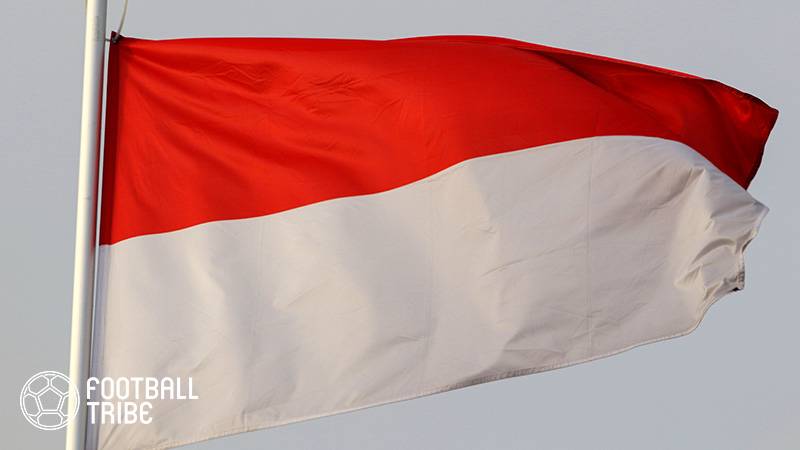
Well, this is it. Indonesia’s dream of returning to the FIFA World Cup for the first time since 1938 came to an end on October 12, following a narrow 1-0 defeat to Iraq. The result condemned Indonesia to the bottom of their fourth-round qualifying group.
At first glance, Indonesia’s run was historic — no Southeast Asian nation had advanced this far in the modern World Cup qualifying era. Yet, the manner in which their campaign unraveled has left fans across the country frustrated and furious.
Now-former coach Patrick Kluivert now finds himself at the center of heavy scrutiny after an underwhelming start to his tenure with the Timnas Garuda. The Dutch legend replaced the widely beloved Shin Tae-yong, whose dismissal in January was met with widespread controversy. Since taking charge, Kluivert oversaw eight matches, recording three wins, four losses, and one draw.
Even those victories came with caveats. Indonesia labored to narrow 1-0 wins over Bahrain and China in the third-round qualifiers — the former a side of similar quality, and the latter arguably the weakest Chinese team in recent memory. As for the 6-0 thrashing of Chinese Taipei in a September friendly? It came against inferior opposition, hardly ideal preparation before facing Asia’s elite.
While the 3-2 loss to Saudi Arabia and the 1-0 defeat to Iraq in the fourth round may seem like progress compared to earlier 5-1 and 6-0 drubbings by Australia and Japan, the performances told a different story. Indonesia were often fortunate not to lose by wider margins, and their only two goals in this round — both scored by Kevin Diks — came from the penalty spot.
Despite facing opponents clearly superior on paper, Kluivert took a risky gamble with his tactics. He abandoned the tried-and-tested three-man defense — a system that had formed the backbone of Indonesia’s stability under Shin Tae-yong — in favor of a four-man backline and a style of play that, while seemingly direct, did not suit the team’s rhythm or strengths.
The most glaring example came in the match against Saudi Arabia. Instead of fielding an additional defender to cover for the still-unfit Sandy Walsh, Kluivert deployed Yakob Sayuri — a naturally attack-minded player — at right-back. The decision proved costly, as Yakob’s defensive lapses directly contributed to all three of Saudi Arabia’s goals.
And then there were the allegations.
As Kluivert and his squad departed Saudi Arabia, rumors began circulating online suggesting that an agreement existed between the Dutchman and Football Federation of Indonesia (PSSI) president Erick Thohir, allegedly requiring Kluivert to start at least four to five players from the Indonesian Super League in every match.
Sharp-eyed netizens noted a pattern: against Saudi Arabia, Kluivert’s starting lineup included four Super League players — Yakob Sayuri, Marc Klok, Beckham Putra, and Ricky Kambuaya. The same occurred in the Iraq match, where Kambuaya, Eliano Reijnders, Thom Haye, and Rizky Ridho all started.
Observers were quick to contrast this with Shin Tae-yong’s final World Cup qualifier in charge — a 2-0 win over Saudi Arabia last November — where only one Super League player, Rizky Ridho, started. Both Rafael Struick and Thom Haye also featured, but at the time, they were still based overseas.
If the theory were true, it might explain the recent wave of diaspora players joining domestic clubs despite being capable of playing abroad — Jordi Amat joining Persija Jakarta, Struick at Dewa United, and Haye and Eliano Reijnders at Persib Bandung.
However, this theory unraveled upon closer inspection. Against Japan, Kluivert started only two Super League players (Beckham and Yakob). In the win over China, there were three (Kambuaya, Rizky, and Egy Maulana Vikri). The victory against Bahrain featured just Rizky, and in his debut — the heavy defeat to Australia — there were none.
Even with the theory debunked, the online backlash against both Kluivert and Erick Thohir showed no signs of slowing down.
It has long been an open secret — and a widely circulated theory — that Erick Thohir dismissed Shin Tae-yong not due to his performance in the 2024 ASEAN Championship, nor because of communication issues with the largely Dutch-born diaspora players. After all, Tae-yong had been instructed to field an under-22 squad in that tournament, limiting his chances of success from the outset.
Instead, many believe Erick’s decision was politically motivated. Tae-yong was, after all, an appointee of former PSSI president Mochamad Irawan, not Erick himself. As Erick is rumored to be laying the groundwork for a 2029 presidential bid, he is thought to want all future successes of both the PSSI and the national team to be attributed directly to his leadership — his project, his legacy.
In that context, Tae-yong’s immense popularity among fans presented a problem. His standing with the public risked overshadowing Erick’s own image, potentially undermining his broader ambitions.
According to this theory, the stage was deliberately set. Tae-yong was tasked with leading a youthful U-22 squad at the 2024 ASEAN Championship, with no formal expectation to win, but rather to build a foundation for the 2025 SEA Games. Yet, once Indonesia inevitably struggled — given the inexperience of the roster — the narrative swiftly shifted. What had been described as a “developmental tournament” was reframed as a failed title bid.
Tae-yong was made the scapegoat. Soon after, prominent pundits began amplifying criticism against him — among them Tommy Welly, Akmal Marhali of Save Our Soccer, and Justinus “Coach Justin” Lhaksana, once a vocal supporter who later joined the anti-Tae-yong chorus. Their collective pressure, intentional or not, provided Erick with the legitimacy needed to make the decisive move.
Once Shin Tae-yong and his staff were dismissed, the search began for his successor — someone Erick Thohir could position as part of his broader legacy in Indonesian football. Fans were devastated by Tae-yong’s departure, given his immense popularity, yet curiosity quickly turned to who might be chosen to fill his sizeable shoes.
At the time, Giovanni van Bronckhorst emerged as one of the frontrunners. Fresh off his dismissal from Turkish giants Beşiktaş, the former Dutch international boasted an impressive résumé — most notably leading Glasgow Rangers to the 2021/22 UEFA Europa League Final, where they narrowly lost to Eintracht Frankfurt on penalties.
Other high-profile names were also floated, including former Manchester United, Barcelona, Ajax, Bayern Munich, and Netherlands head coach Louis van Gaal, as well as Ajax legend Marco van Basten.
Patrick Kluivert, too, was among those shortlisted — though his recent track record was less than stellar. His brief spell as Curaçao national team manager ended in disappointment, and he was dismissed by Adana Demirspor after just five months. To his credit, however, Kluivert came close to guiding the Turkish side — featuring Mario Balotelli at the time — to the 2023/24 UEFA Europa Conference League group stage.
Van Gaal was seen as the clear favorite for the position. However, in January, it was announced that Kluivert had been appointed as Indonesia’s new head coach — reportedly because he was the only candidate who attended the job interview, held on Christmas Day by PSSI.
On October 16, just four days after the Iraq defeat, the PSSI confirmed that Kluivert and his entire coaching staff had “mutually agreed” to end their partnership. The announcement came after an internal evaluation led by Erick himself, who thanked Kluivert for his service but acknowledged that “a new direction” was needed.
The sacking left Indonesia’s national team in flux. With the 2026 World Cup dream extinguished, attention has now turned toward rebuilding for the 2027 AFC Asian Cup qualifiers and the newly announced FIFA ASEAN Cup.
Erick admitted that the process of appointing a new head coach is proving challenging, citing the “immense public scrutiny” surrounding the national team and the difficulty of finding a candidate capable of managing Indonesia’s blend of local and diaspora players.
As of late October, PSSI has yet to finalize a replacement, with several foreign names reportedly being considered — some with prior Asian football experience.
The sense of uncertainty looms large. What was supposed to be Indonesia’s golden generation — the team that broke barriers and inspired a new wave of footballing pride — is now left without a leader, their progress once again hindered by mismanagement and politics.
For now, the dream has ended. But in a nation where football passion burns as fiercely as anywhere in the world, the hope — however faint — remains that the next chapter of the Garuda’s journey will finally see them soar again.