


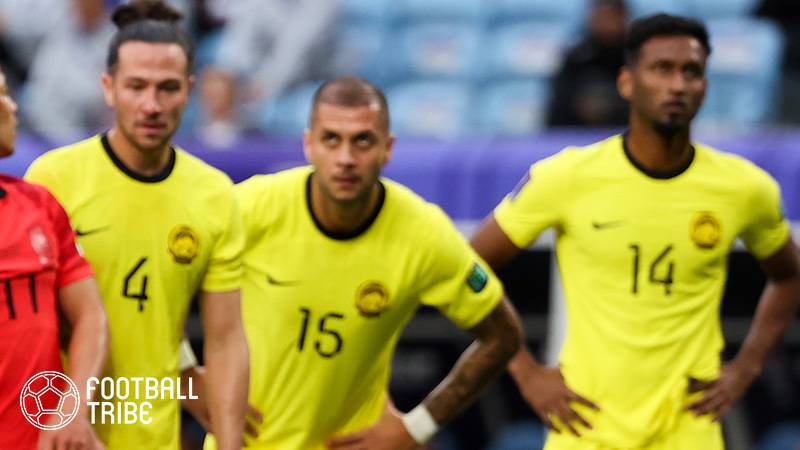
For the past few days, Malaysian football has been reeling from a scandal that few saw coming, one that has shaken the Football Association of Malaysia (FAM) to its core and thrown the national team’s Asian Cup hopes into jeopardy.
It began with FIFA’s bombshell announcement on September 26: seven Harimau Malaya players were banned after investigations found they had used forged documents to obtain Malaysian passports and represent the national team. The world football governing body did not stop there, hitting FAM with a heavy fine of CHF 100,000 (RM540,000) and demanding tighter oversight on player eligibility.
FAM confirmed it would appeal the ruling, describing the decision as “unexpected and deeply disappointing.” The federation has stood by the players, insisting that they were fielded in good faith and with proper documentation verified by Malaysian authorities. “There was a technical error, but our heritage players are legal,” FAM secretary-general Noor Azman Rahman told The New Strait Times, doubling down on their stance that the players were eligible under FIFA’s own statutes.
But the fallout has been messy. Liga MX side Club América confirmed the suspension of striker Federico Holgado after he represented Malaysia during the World Cup qualifiers, while Spain’s UD Ibiza suspended defender Julian Palmero pending further clarification. Argentine outfit Talleres followed suit, sidelining midfielder Rodrigo Machuca as they awaited guidance from FIFA, while Alaves, also from Spain, has sidelined defender Facundo Garces while they waited for an official verdict from FIFA.
The controversy has sparked anger among fans and politicians alike, with calls for accountability growing louder. Former youth and sports minister Khairy Jamaluddin questioned FIFA’s actions, saying, “Why punish the players and the team so close to the Asian Cup? The timing is strange.” Politician Jamal Md Yunos went further, urging top FAM officials to step down over what he called a failure of governance.
Yet others have rallied behind the embattled federation. Johor Crown Prince Tunku Ismail Sultan Ibrahim — a former FAM president — even released a letter from Malaysia’s National Registration Department (NRD) to prove the players’ documentation was legitimate. “We should stand united, not accuse each other,” he said in a statement urging Malaysians to back the team rather than tear it apart.
The wider football community is watching closely. The Asian Football Confederation (AFC) has chosen to “hold fire” on any action, waiting for FIFA’s eligibility ruling to run its course. Legal experts have noted that the scandal could also have ramifications under Malaysian law, as document forgery is a criminal offense, though no charges have yet been filed.
Comparisons have been drawn to past eligibility scandals involving Timor-Leste and Equatorial Guinea, both of which resulted in teams being thrown out of competitions. For Malaysia, the stakes are just as high: failure to overturn the bans could see their Asian Cup campaign severely undermined, with head coach Peter Cklamovski forced to rebuild almost half his starting XI before the tournament kicks off.
“This is embarrassing Malaysia’s image on the global football stage,” one sports lawyer told NST. “The focus must now be on whether these documents were doctored, and if so, who is responsible.”
For the players at the heart of the scandal, the timing is cruel. Many had only recently switched allegiances to represent Malaysia, hoping to boost the nation’s chances in Asia. Instead, they are now facing a fight just to clear their names.
And so, as the appeal process unfolds, Malaysian football finds itself at a crossroads — battling not just for a place at the Asian Cup, but for its reputation in the eyes of the world. Whether this saga ends in redemption or further disgrace remains to be seen, but one thing is certain: the Harimau Malaya will not escape this storm unchanged.