


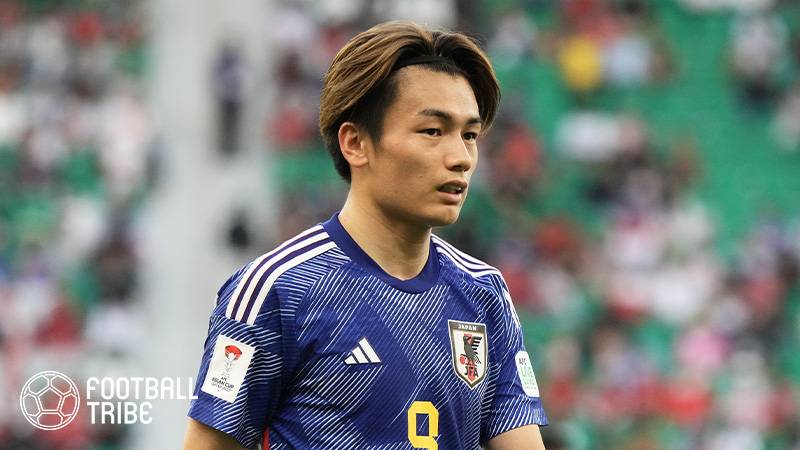
When Japan fell just short against Croatia in the Round of 16 at the 2022 FIFA World Cup, there was an unmistakable sense of unfinished business. The heartbreak in Qatar didn’t break the Samurai Blue , it instead galvanized them. Under Hajime Moriyasu, Japan have since evolved into one of the most tactically mature and technically efficient sides in world football. As the 2026 FIFA World Cup looms closer, whispers are growing louder: could Japan finally be ready to make the leap from regional powerhouse to genuine global contender?
Over the past two years, the evidence has been mounting. Japan’s run of form in 2023 and 2024 was nothing short of sensational — including dominant wins over Germany (4-1) and Turkey (4-2), and a remarkable campaign in the 2023 AFC Asian Cup that showcased both attacking depth and defensive composure. The team has shed the “plucky underdog” label that defined them for decades. Instead, they now embody a new identity: confident, structured, and fearless.
Moriyasu’s system — a flexible 4-2-3-1 that can fluidly shift into a 3-4-2-1 — allows Japan to transition seamlessly between possession control and blistering counterattacks. With players like Kaoru Mitoma, Takefusa Kubo, and Ritsu Doan thriving in Europe’s top leagues, the Samurai Blue no longer lack cutting edge or top-level experience. Their midfield, anchored by Wataru Endo and Hidemasa Morita, offers both steel and sophistication — qualities that define true contenders on the global stage.
What truly sets Japan apart, however, is their tactical discipline and collective intelligence. In an era dominated by star-centric teams, Japan’s greatest weapon is cohesion. Every player understands their role; every movement feels rehearsed and purposeful. Against elite European opposition, they have repeatedly demonstrated the ability to press in coordinated waves, recycle possession efficiently, and punish mistakes with ruthless precision. This maturity, once elusive for Asian sides, has become a defining hallmark of Moriyasu’s Japan.
Even global analysts have begun to take notice. ESPN recently described Japan as “the most complete team outside the traditional elite,” while The Athletic suggested that “if any non-European or South American nation is to reach the semifinals in 2026, Japan are best positioned to do it.” The expanded 48-team format could also work in their favor — more matches, more rhythm, and a structure that rewards consistency over a single moment of brilliance.
Off the pitch, Japan’s youth development pipeline continues to thrive. The J.League’s focus on technical mastery, tactical awareness, and overseas integration has produced a new generation of players comfortable with European intensity and speed. The likes of Keito Nakamura, Ayase Ueda, and Koki Machida represent a modern breed of Japanese footballer — fearless, physical, and refined. With such depth, Japan can now rotate without losing their tactical balance — a luxury few Asian nations have ever possessed.
Looking ahead, Japan’s recent friendlies and qualifiers suggest a team building toward something far greater than another Round of 16 appearance. The mental scars of Qatar have become lessons; the heartbreak has turned into hunger. The 2026 World Cup — hosted across the United States, Mexico, and Canada — will demand endurance, adaptability, and unity. These are qualities Japan have in abundance.
In many ways, the Samurai Blue embody football’s most compelling narrative: the rise of a collective that refuses to be defined by its past limitations. Their evolution mirrors that of the nation itself — precise, patient, and relentlessly progressive.
So, as the world turns its gaze toward football’s traditional giants — Brazil, Argentina, France, and England — a quiet storm is brewing in East Asia. Japan may not shout the loudest or boast the most glittering names, but make no mistake — they are coming, blade sharp and battle-tested.
And Brazil have already felt the cut.
In a stunning friendly at Tokyo’s Ajinomoto Stadium on October 14, Carlo Ancelotti’s Brazil looked to be cruising after taking a 2-0 halftime lead. But the second half witnessed something extraordinary. Takumi Minamino halved the deficit in the 52nd minute, Keito Nakamura equalized ten minutes later, and as Brazil struggled to cope with Japan’s relentless press, Ayase Ueda struck the winner in the 71st. The 3-2 triumph wasn’t just a friendly upset — it was a statement. Proof that Japan can go toe-to-toe with football’s elite, and win.
Because if history has taught us anything, it’s that the Samurai always strike when least expected.