


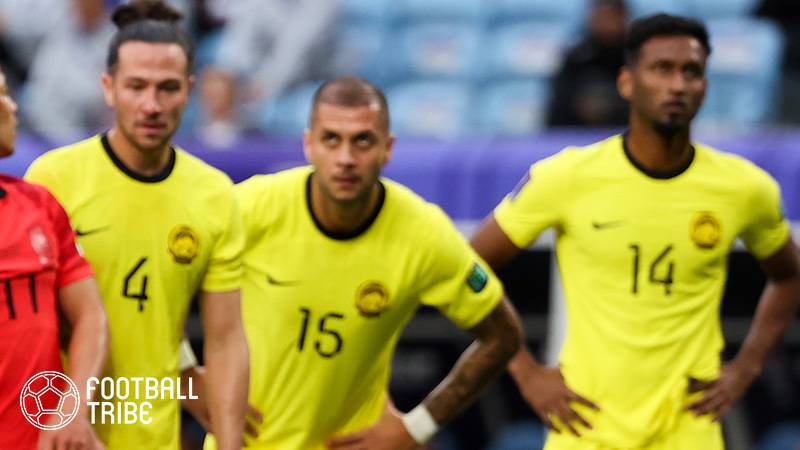
When FIFA’s ruling was finally made public in late September 2025, it felt less like a bombshell and more like the inevitable conclusion to a saga that had been quietly building for months. The Football Association of Malaysia was fined heavily, seven naturalized players were handed 12-month bans, and Malaysian football once again found itself under an uncomfortable global spotlight. What caught attention was not the severity of the punishment, but its direction.
As FAM absorbed the full weight of FIFA’s sanctions, Tunku Ismail Sultan Ibrahim—the most influential figure in the country’s football landscape—remained notably untouched.
That imbalance would come to define the affair.
The origins of the controversy did not lie in the second half of 2025, but earlier that year. Malaysia’s aggressive push to fast-track naturalized players had already gathered pace by early 2025, with several foreign-born players claiming Malaysian heritage being cleared to represent the national team. By June 2025, seven such players had featured together in competitive fixtures, most notably in Malaysia’s emphatic 4-0 victory over Vietnam in the qualifiers for the 2027 AFC Asian Cup.
At the time, their eligibility appeared settled. FIFA had initially indicated that the documents submitted by FAM suggested the players were eligible. Public scrutiny was minimal, and the results on the pitch only added momentum to the project.
That changed almost immediately.
On 11 June 2025, a formal complaint was lodged with FIFA questioning the authenticity of the documentation used to establish Malaysian lineage for the players. What had previously been a background murmur suddenly became an official investigation. FIFA opened disciplinary proceedings, re-examining documents that had earlier passed preliminary checks.
The process moved largely out of public view until 26 September 2025, when FIFA’s Disciplinary Committee delivered its verdict. The documents submitted by FAM were found to be falsified or misleading. Under FIFA’s strict-liability framework, intent was irrelevant. Responsibility lay with the association that filed the paperwork. FAM was fined CHF 350,000, while the seven players were banned from all football activity for 12 months.
FAM appealed. In early November 2025, FIFA’s Appeal Committee rejected that appeal in full, upholding both the fines and the bans. Only then did the matter move toward the Court of Arbitration for Sport.
On paper, the issue was resolved.
But Malaysian football rarely operates purely on paper.
The naturalization drive was not an accidental administrative overreach. It was part of a broader strategy to accelerate Malaysia’s competitiveness, a strategy publicly articulated and defended by TMJ well before the sanctions were imposed. Throughout the first half of 2025, he spoke openly about the need for Malaysia to be more ambitious, to stop lagging behind regional rivals, and to fully exploit legal pathways to strengthen the national team.
He approved candidate pools. He defended the inclusion of naturalized players when doubts were raised. And when FIFA’s sanctions were confirmed in September 2025, he stepped forward once more, offering to personally finance FAM’s legal challenge to CAS, stressing that no public funds would be used.
Yet when consequences were handed out, they stopped short of him.
From a legal standpoint, the explanation was straightforward. TMJ did not sign the eligibility documents. He did not submit files to FIFA. He did not hold a formal administrative role within FAM when the documentation was lodged. FIFA’s disciplinary system is designed to sanction associations, not influential figures operating outside official structures. From Zurich’s perspective, FAM alone fit the criteria for punishment.
Still, anyone who followed Malaysian football closely in 2024 and 2025 understood that authority did not always align neatly with job titles.
In many footballing environments, an individual who shapes strategy so decisively would be expected to share responsibility when that strategy collapses. In Malaysia, that expectation shifts the moment royalty enters the equation. TMJ is framed less as an executive actor and more as a patron—someone who guides and pushes, but does not formally decide. It is a subtle distinction, yet one that carries enormous weight when accountability is assigned.
That distinction also shaped how the story was told.
In the weeks following FIFA’s ruling in late September and October 2025, criticism of FAM was blunt and unrelenting. Questions of governance, compliance failures, and internal oversight dominated the conversation. Discussion of TMJ’s role, by contrast, was measured and indirect, often folded into broader debates about systems and structures rather than individual responsibility. Administrators understood the limits. Journalists understood the sensitivities. FAM itself had little incentive to redirect blame upward, knowing that admitting external influence could trigger further scrutiny from FIFA.
So responsibility settled where it most often does: with the institution least able to deflect it.
FIFA, meanwhile, showed no inclination to look beyond the association. Sanctioning FAM resolved the matter efficiently. Pursuing an influential royal figure would have taken the issue well beyond football, and FIFA has historically shown little appetite for that kind of confrontation. In this case, governance was about containment, not escalation.
This does not mean TMJ emerged entirely untouched in the court of public opinion. By late 2025, the naturalization project was already being discussed more cautiously, its ambition reframed as a gamble that failed. Among supporters, the sense that accountability flowed in only one direction was difficult to ignore. Yet experience suggests that controversies linked to powerful figures in Malaysian football tend to fade, remembered as failed experiments rather than personal reckonings.
What remains is the pattern.
Influence in Malaysian football often exists without liability. Ambition advances without consequence. When initiatives succeed, credit flows upward. When they collapse, responsibility falls downward. This scandal did not create that imbalance—it simply exposed it more clearly than most.
In the end, this was never just about seven players or documents submitted in March and June 2025 and re-examined months later. It was about how the system decides who must answer when ambition outruns governance.
And once again, the conclusion followed a familiar script.
FAM took the fall.
The architect carried on.