


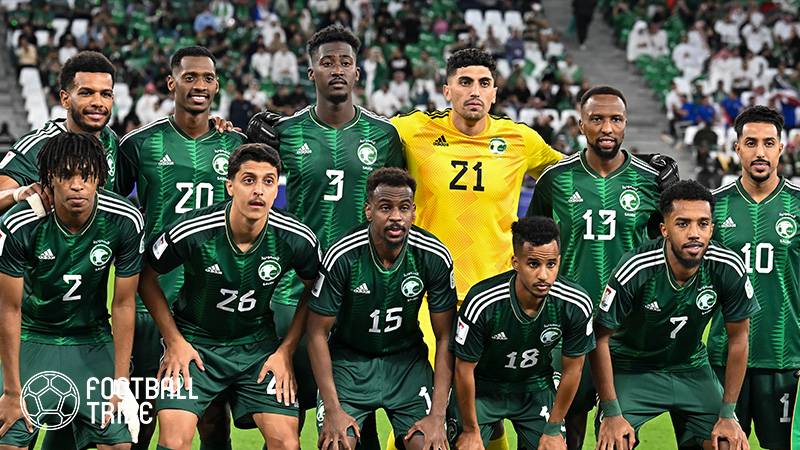
The Asian Football Confederation (AFC) has confirmed that the fourth round of Asian qualifying for the 2026 FIFA World Cup will be staged in Qatar and Saudi Arabia—a decision that immediately drew formal objections from the four other competing nations: Indonesia, Iraq, the United Arab Emirates, and Oman.
The dissenting federations argue that awarding hosting rights to two sides already considered strong favorites to claim the round’s only two direct World Cup berths hands Qatar and Saudi Arabia a substantial and unfair advantage.
Both Gulf states have become fixtures in high-profile football hosting, and their close ties to the AFC and FIFA have sparked concerns. Qatar hosted the 2022 World Cup, will host the next five FIFA U‑17 World Cups, and remains a major sponsor of Asian football through Qatar Airways. Meanwhile, Saudi Arabia—set to host the 2034 World Cup—has invested heavily through the Public Investment Fund (PIF), and backs the AFC via its Visit Saudi campaign and the futuristic NEOM project.
These deep ties have led critics to question whether the AFC’s decision-making is impartial. Allegations of “sport-washing” continue to surround both governments, and memories are still fresh of Qatar’s controversial 2–1 win over India in June 2024, where a contentious refereeing decision helped them progress at India’s expense.
In a joint statement issued on 9 June, the Iraq Football Association—backed by the Football Association of Indonesia (PSSI)—called on the AFC to ensure “neutrality and transparency” in host selection. The UAE and Oman issued similar protests days later.
Despite the pushback, the AFC confirmed both Qatar and Saudi Arabia as co-hosts, citing their “world-class infrastructure, event experience, and logistical readiness” as key justifications. No information was made public about alternative bids or the criteria used in the selection process, further fueling criticism from the protesting nations.
The fourth round of AFC qualifiers will take place in October 2025, with six teams divided into two groups of three. Each team will play two matches in a single round-robin format, with all games held in either Qatar or Saudi Arabia.
The top team from each group will qualify directly for the 2026 FIFA World Cup. Meanwhile, the two second-placed teams will face off in a fifth-round playoff, with the winner advancing to the inter-confederation playoffs.
With this compressed, high-stakes format, every point is vital. Playing in familiar environments—complete with climate advantages, crowd support, and logistical ease—Qatar and Saudi Arabia are expected to enjoy significant home-field benefits.
While the AFC’s decision appears final, resentment lingers. Critics argue this continues a pattern where smaller nations must overcome not only elite opponents, but also structural biases embedded in regional football politics.
For Indonesia, Iraq, the UAE, and Oman, the road to North America 2026 now involves battling giants on territory those giants know all too well. With the fourth round played in just one window, and only two direct spots available, the margin for error is slim. Underdog stories may still emerge—but the broader debate over fairness, transparency, and the influence of Gulf powerhouses in Asian football is unlikely to fade anytime soon.