

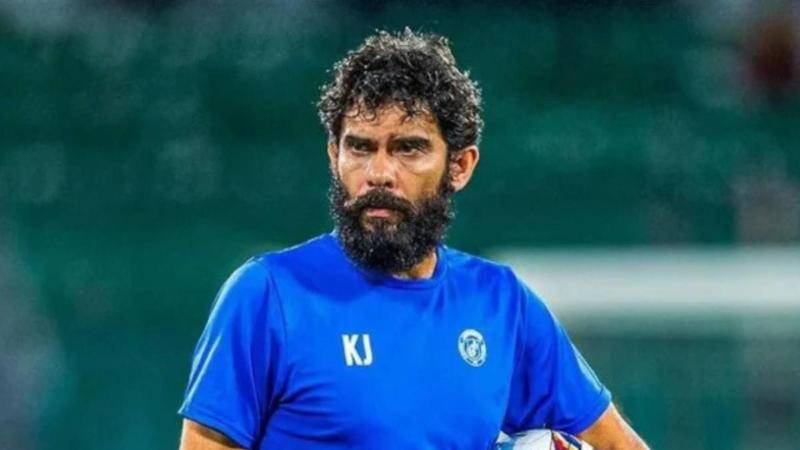
By appointing Khalid Jamil as the national team head coach, the All India Football Federation (AIFF) has taken a bold but refreshingly local step in its pursuit of footballing success. Known for his deep understanding of Indian football and an unmatched commitment to domestic growth, Jamil brings far more than just technical expertise to the national dugout—he brings belief, structure, and identity.
A Man Who Knows Indian Football Inside Out
Unlike many of his foreign predecessors who often struggled to grasp the cultural and tactical nuances of Indian football, Khalid Jamil is born of the system. Having played for and coached within the I-League and Indian Super League (ISL) for years, he knows the domestic circuit better than anyone. His familiarity with players, conditions, and logistical realities gives him a clear edge in team selection and tactical planning.
Jamil doesn’t need months of scouting to identify talent—he’s already coached or competed against most of them. From the industrious Ashutosh Mehta to unsung heroes in regional leagues, he’s built his career working with and elevating Indian talent, not relying on marquee foreigners to deliver the goods.
A Robust, Structured Approach to the Game
Khalid’s teams may not always be flamboyant, but they are notoriously difficult to beat. His defensive structure is tight, with disciplined pressing and compact blocks that frustrate even technically superior sides. This robustness was key to Aizawl FC’s fairytale I-League title win in 2016–17, a success story that remains one of Indian football’s most inspirational moments.
He prefers physical, hard-working players who can outmuscle and outrun opponents rather than purely technical showmen. Ashutosh Mehta, a player emblematic of Khalid’s style, represents that grit—strong in duels, committed in defense, and relentless in work rate.
Not Just a Coach—A Committed National Servant
One of the most underrated attributes of Jamil is his commitment. Where some foreign coaches treated the Indian national job as a stepping stone or a semi-retirement plan, Khalid Jamil sees it as a mission. He isn’t here to “try things out” or to adapt to India—he’s part of Indian football’s DNA.
Whether with Aizawl, Jamshedpur FC, or NEUFC, he has shown that results can be delivered even under constraints. At NorthEast United FC, he took a low-budget team to the ISL playoffs in 2021, proving that structure and motivation can rival star power when executed properly.

Challenges Ahead—but the Right Foundations
Of course, challenges remain. India’s attacking potency is still lacking, and questions about player development and grassroots investment cannot be solved by a head coach alone. But with Khalid at the helm, at least there’s a clarity of approach and a coach willing to sweat for the badge.
Indian football doesn’t need gimmicks—it needs grit. In Khalid Jamil, it may finally have a coach who truly reflects the identity of Indian football and is capable of lifting it to the next level.
Tactically Structured: Hard to Break, Tough to Beat
Jamil’s teams aren’t known for flashy possession-based football—but that’s not a weakness, it’s a strategy. His preference lies in tactical solidity and vertical transitions, often setting up in a compact 4-4-2 or 4-2-3-1 shape. He drills his teams to stay narrow, minimize space between lines, and force opponents wide—a classic low-block structure that frustrates more technical teams and cuts off central progression.
Key Tactical Traits Under Jamil:
-
Compact Mid-Block: His teams rarely press high without purpose. They engage around the halfway line, forcing mistakes and triggering fast breaks.
-
Defensive Discipline: Players are tasked with holding their zones and staying organized. Every player has a role with or without the ball.
-
Vertical Counter-Attacks: Upon regaining possession, his teams often look to attack vertically within two or three passes—not aimless long balls, but calculated releases into space.
-
Set-Piece Focus: Recognising India’s traditional strength in set-pieces, Jamil prioritises dead-ball situations, both in attack and defense.
He’s also selective in his player choices—favoring physically resilient, positionally intelligent players who can execute his system over more technically gifted but inconsistent options. Defenders like Ashutosh Mehta fit the mold: strong, composed, and able to adapt tactically.
A Committed Coach, Not a Tourist
Perhaps the biggest difference with Khalid Jamil is his commitment. Where several foreign coaches have treated the India job as a temporary assignment—often talking about “potential” without delivering results—Jamil is here for the grind. He’s not aiming to “introduce” a European system. He’s crafting a team tailored to the Indian footballer’s reality, with systems that fit available skill sets rather than forcing unnatural styles.
He doesn’t carry the burden of proving himself to European markets or sponsors—he’s already proven himself to India, and that’s who he works for.
Can He Succeed?
Of course, there are challenges. India’s talent pool remains shallow in some positions, and goal-scoring is a long-standing issue. But what Jamil offers is a realistic blueprint: Build a team that’s tactically sound, physically prepared, hard to score against, and emotionally united. From there, even a modest improvement in attacking transitions can make India far more competitive across Asia.
If given the time and autonomy he deserves, Khalid Jamil might just do what no coach before him has: not just manage Indian football, but represent it.